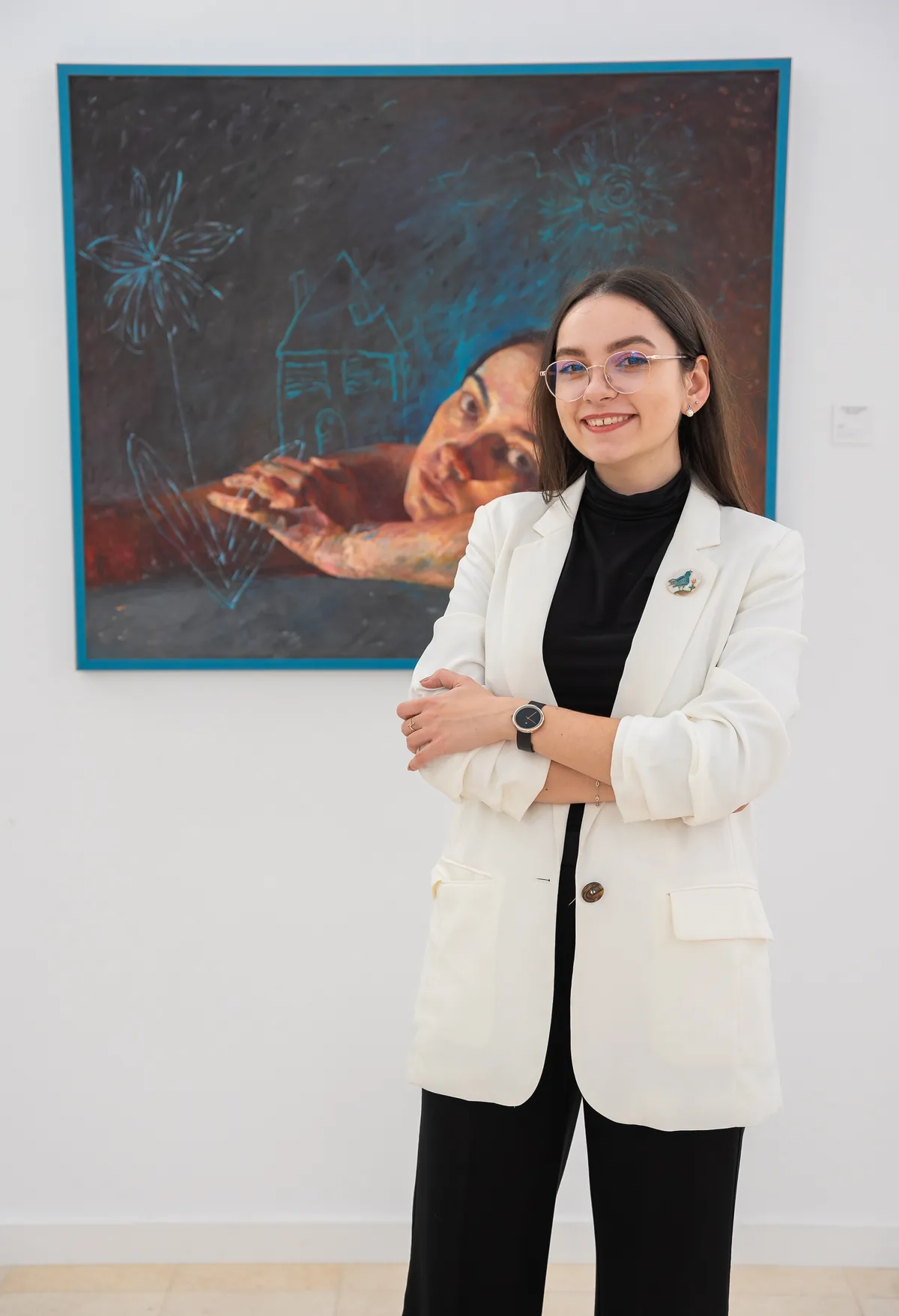
ANDREEA GABRIELATUDOR
The Genealogy of Affect: Mamaia Vasilica
Andreea Gabriela Tudor (b. 2001, Galați, Romania) is a visual artist and PhD candidate at the “George Enescu” National University of Arts in Iași. Holding dual Master’s degrees in Visual Arts from the “Dunărea de Jos” University and in Cultural Studies from the Center of Excellence in Image Studies (University of Bucharest), her practice exists at the intersection of drawing, painting, and installation. An active member of the Romanian Fine Arts Union (UAP), she is a three-time recipient of the “Young Talents” scholarship from the Margareta of Romania Royal Foundation. Her work has been showcased in prestigious national and international contexts, including the Art Capital at the Grand Palais in Paris (2026), MoBu Bucharest (2026), the National Museum of Art of Romania (2025), and extensive solo exhibitions such as “Fragments from a Silent Field” (2026) and the traveling exhibition “This Space Does Not Exist” (2024-2025).
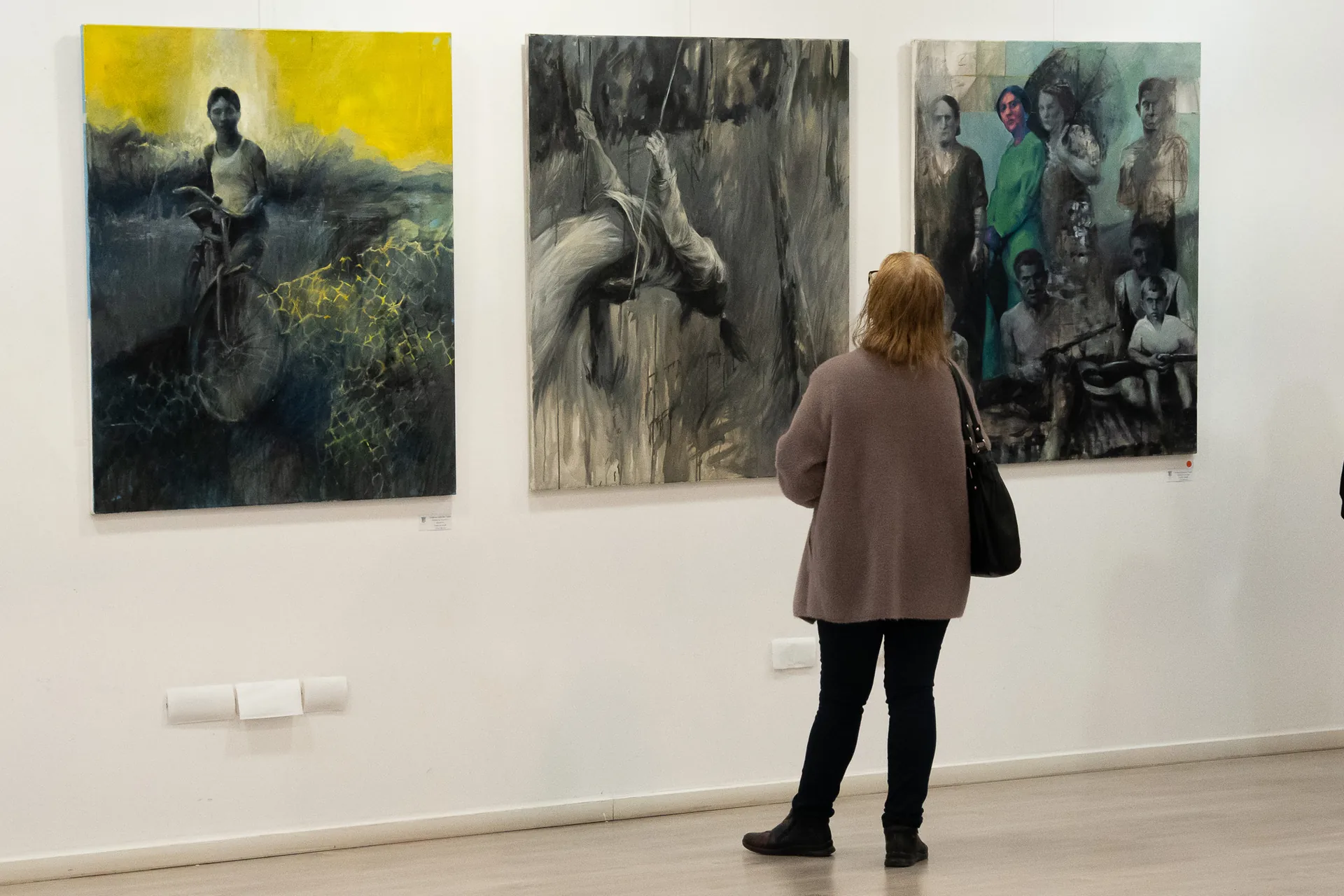
My artistic practice is an ongoing investigation into memory as inheritance and generational identity. Growing up in a post-communist socio-cultural transition, I utilize post-memory and the family archive not merely as documentary sources, but as raw material for translating affective history into a contemporary visual language. By merging figurative drawing and painting with readymades and spatial installation, I deconstruct the boundaries between intimate narrative and collective archetype. My work offers the public a mirroring space for their own experiences of time, grief, and belonging.
Syntax of an Absence:
The Red Thread
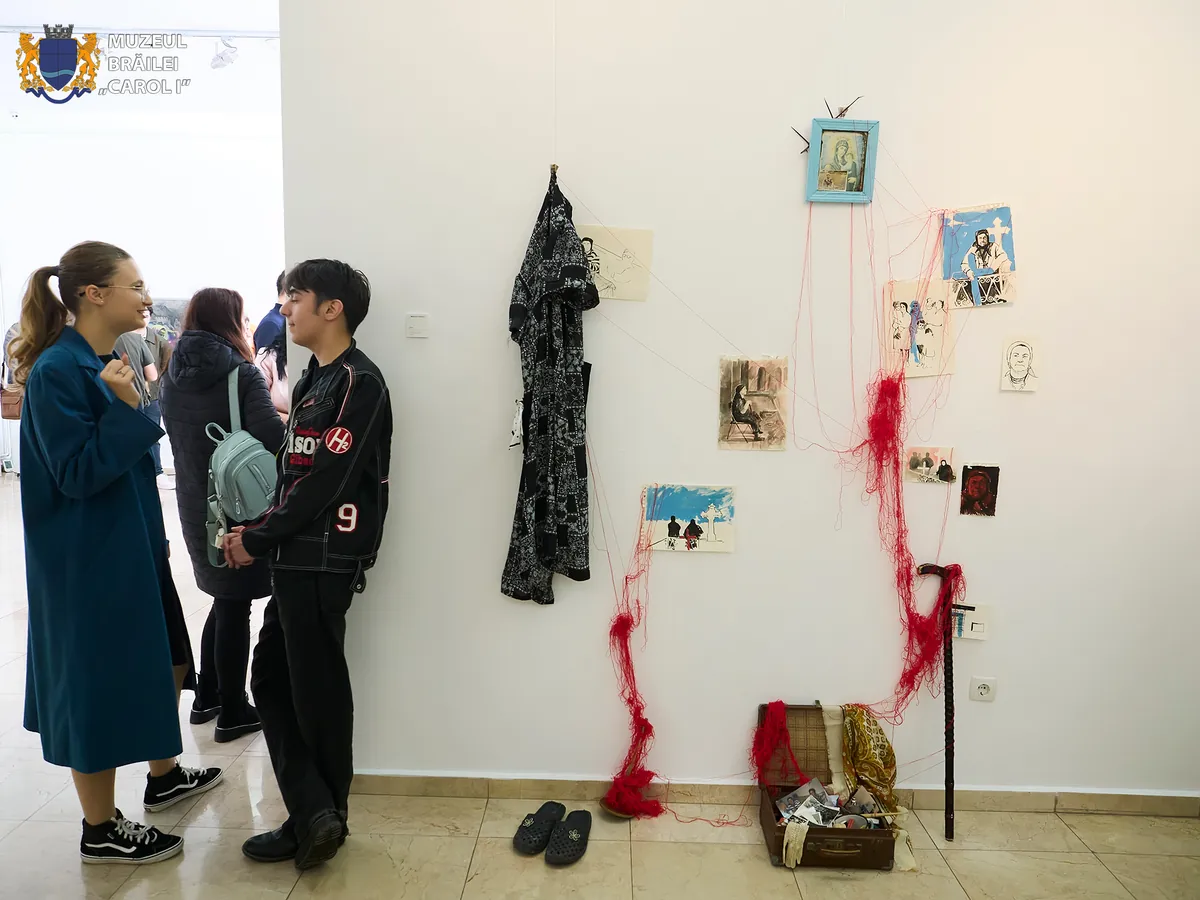
- Medium: Mixed-media installation (ink and acrylic on paper, archival printed photography, personal objects, textile thread).
- Dimensions: Variable (approx. 200 cm H x 150 cm W x 100 cm D footprint).
- Technique: Installation Art (Spatial assemblage, pictorial layering, and reinterpretation of archival photographic material).
Born in 2001, in a post-communist Romania suspended between identity reconstruction and rapid digital acceleration, I felt an acute need to interrogate my origins through a tangible, analog lens.
The foundation of this installation is rooted in the life of my great-grandmother. The artwork's original Romanian title, Mamaia Vasilica-an affectionate, culturally ingrained term used to address a grandmother or great-grandmother-reflects this intimate connection.
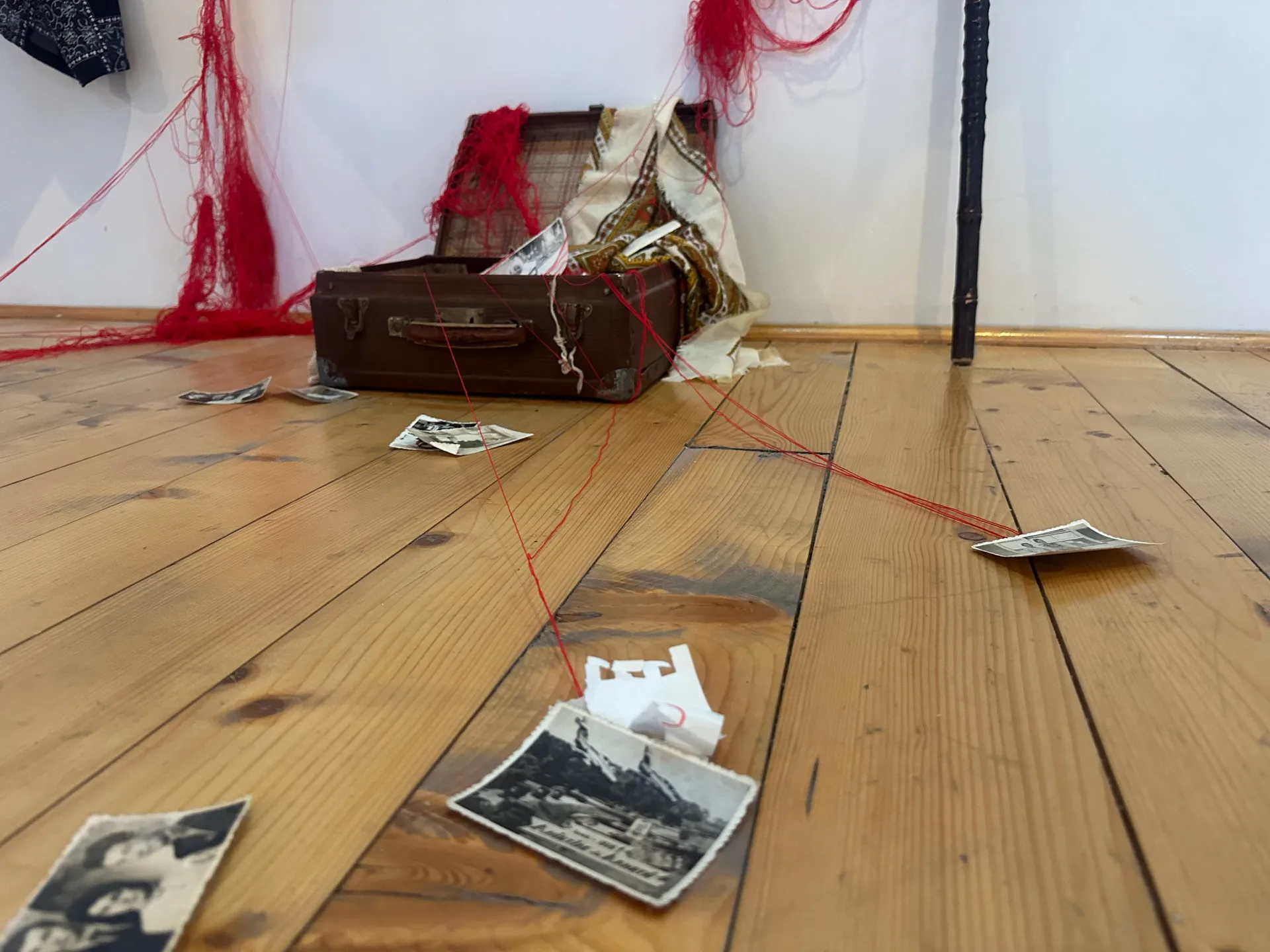
The artwork represents a materialization of post-memory. It is a deliberate effort to recover a past I did not physically experience, yet whose affective echo I inherited. The genesis of the work began with an investigation of the family archive, treating old photographs not as mere documents, but as fragments of arrested time.
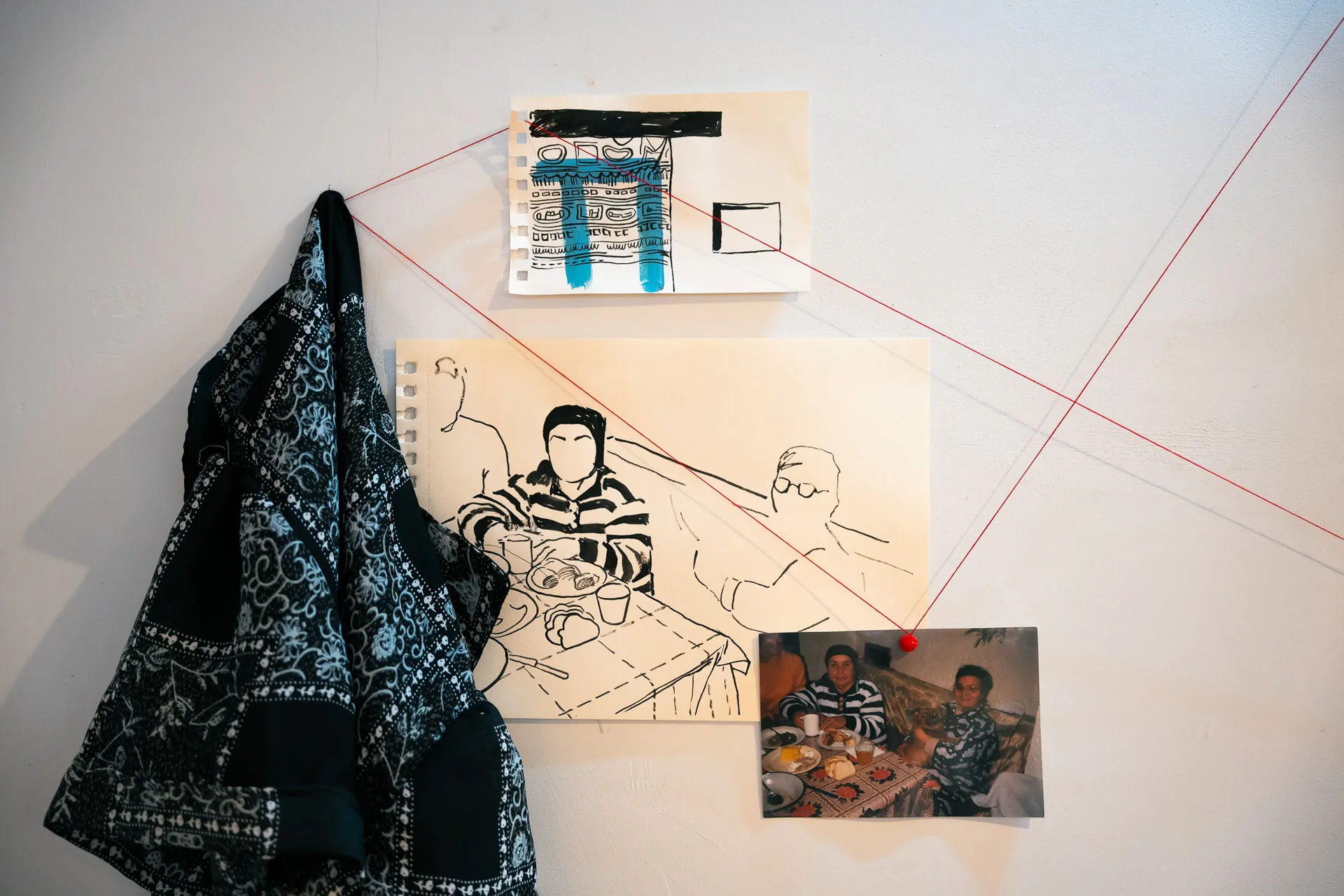
My process involves a dual translation. First, I recontextualize these archival images through personal filters, creating contemporary ink and acrylic drawings that act as subjective interventions upon memory.
Subsequently, I translate this graphic work into a three-dimensional plane, building a vertical axis of my great-grandmother's existence.
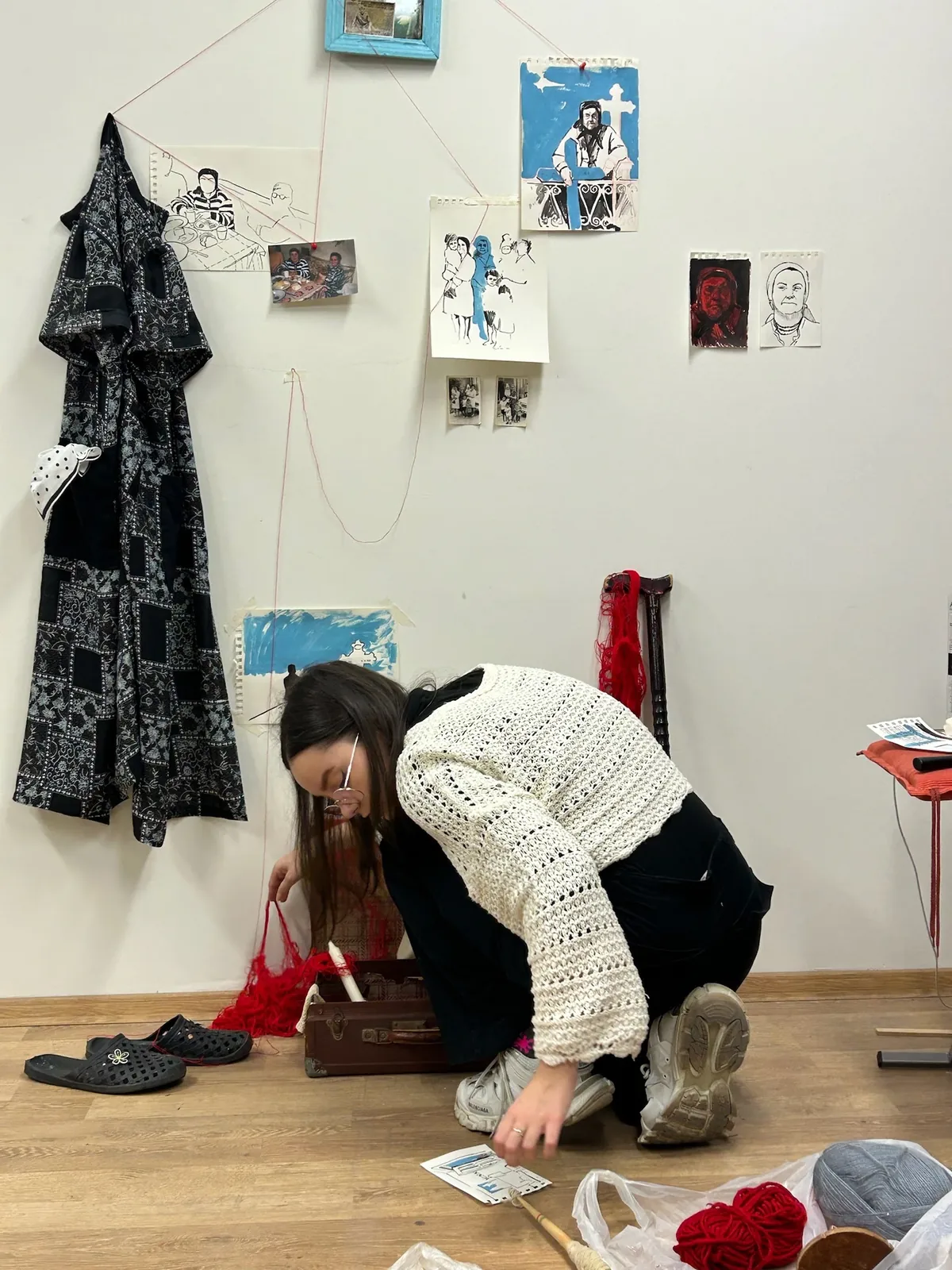
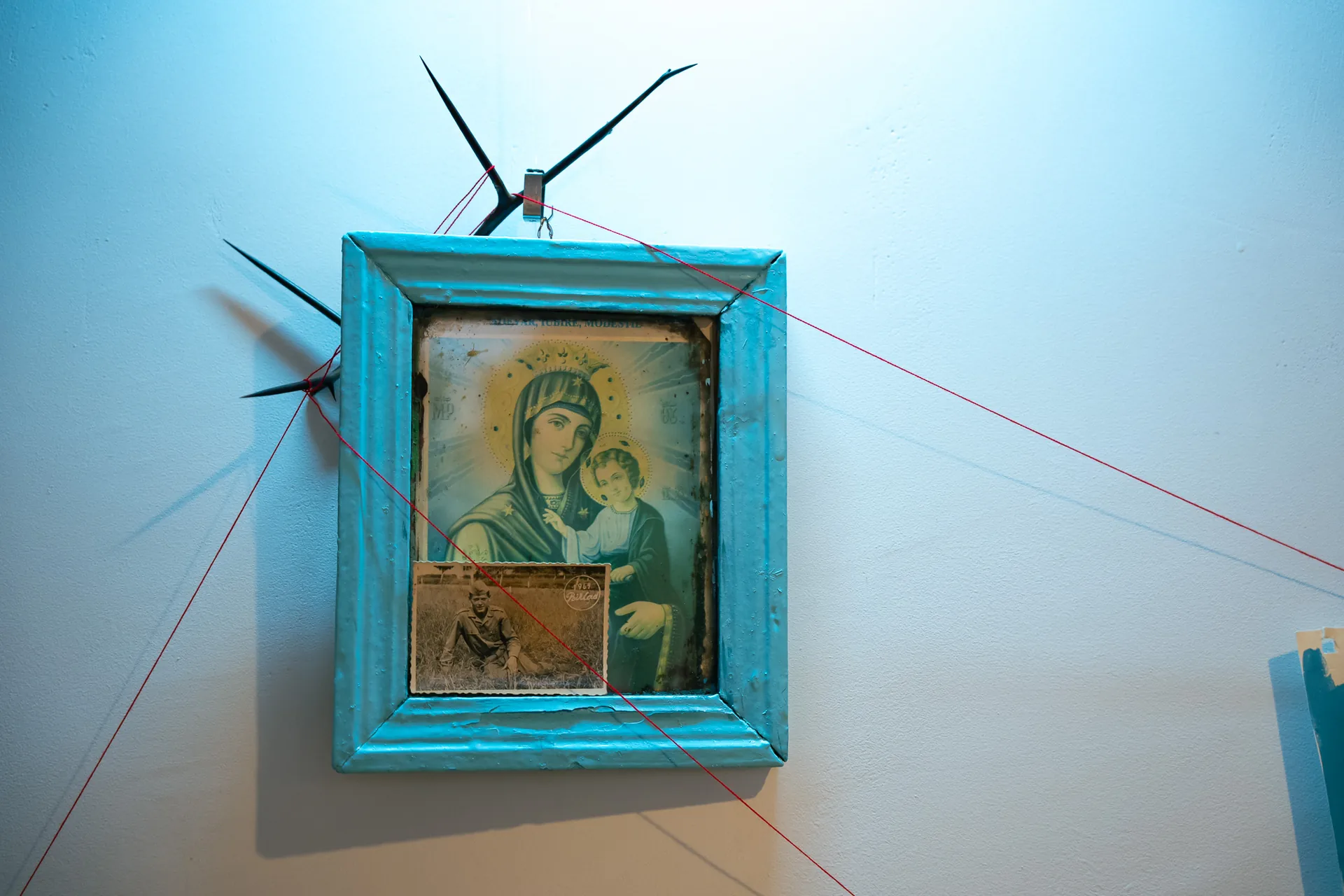
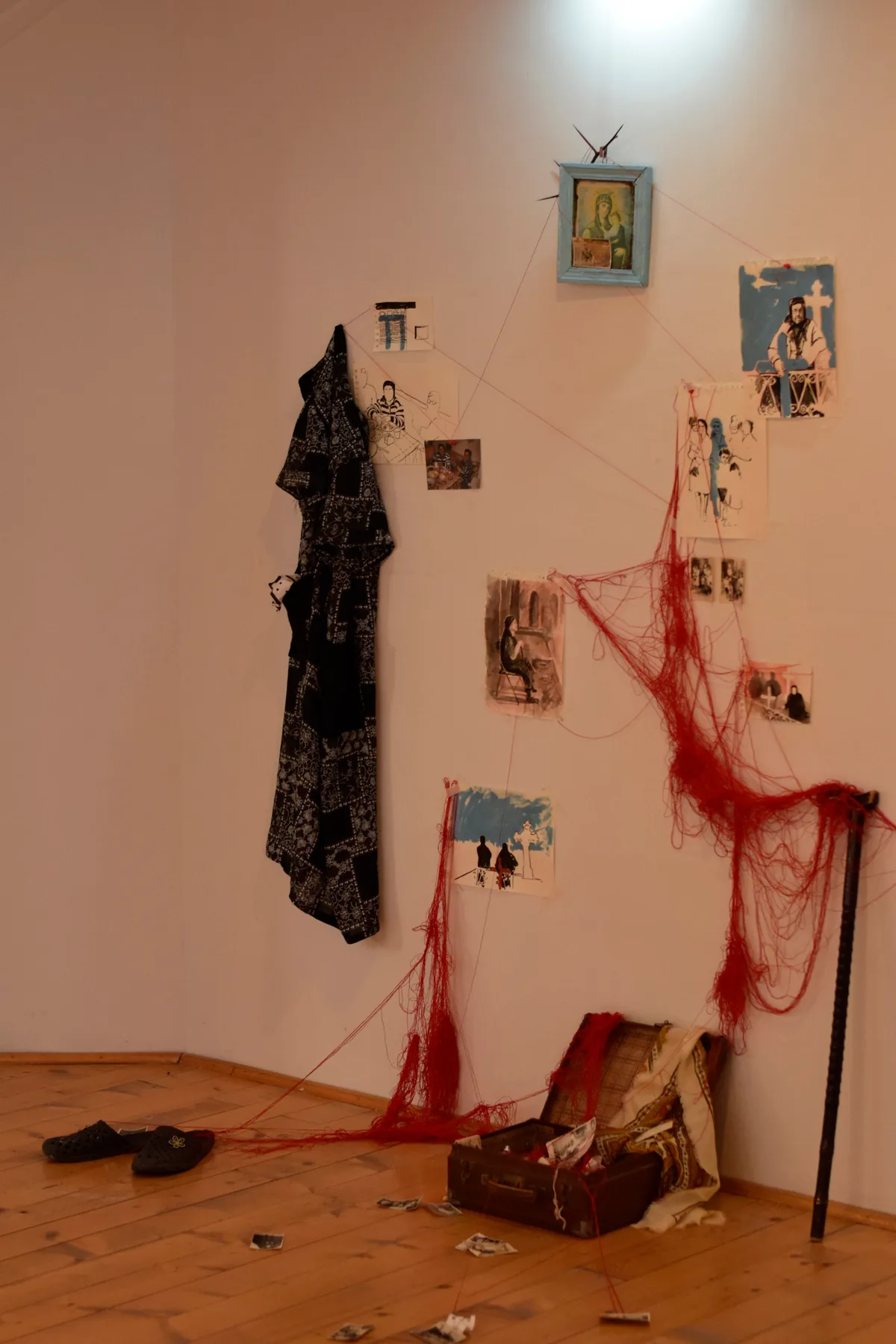
The central navigational element of this visual syntax is an intense red thread. It is anchored at the highest point by an orthodox icon salvaged from her home, symbolizing the absolute spiritual universe and deep religious faith characteristic of her generation. Tucked carefully into the icon's frame is an old photograph of my grandfather in his military uniform-a poignant placement silently communicating that he was constantly held within her prayers.
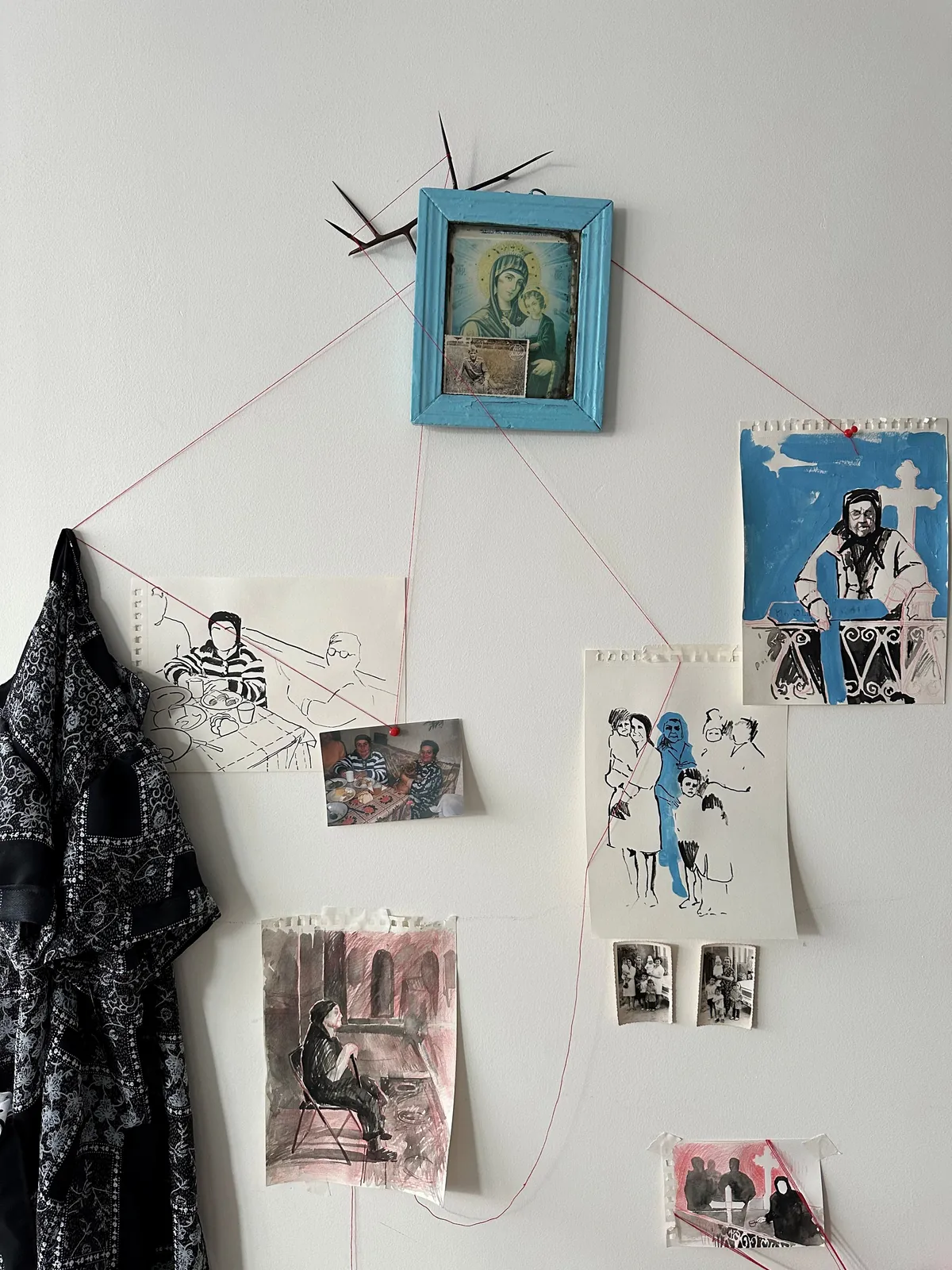
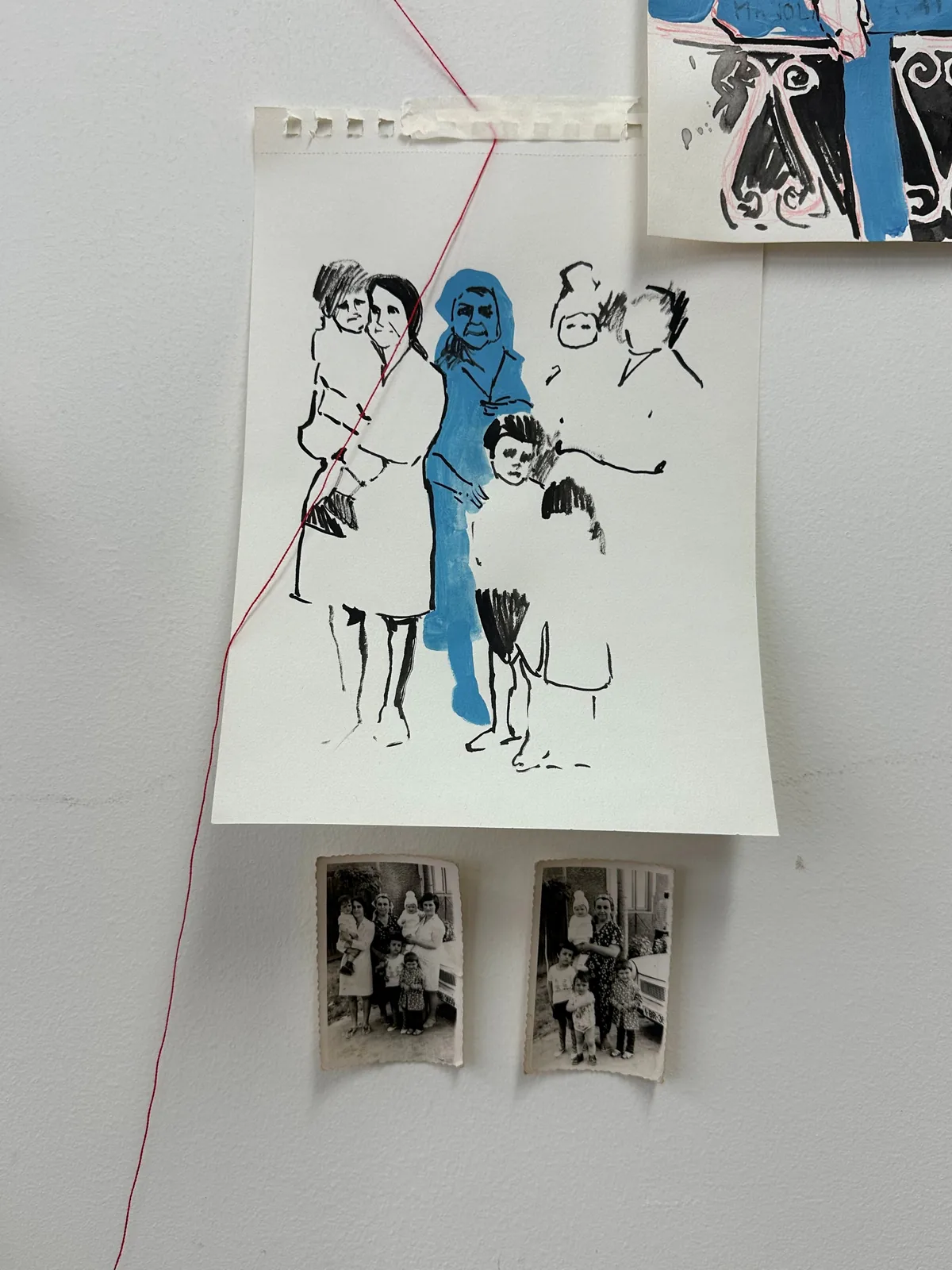
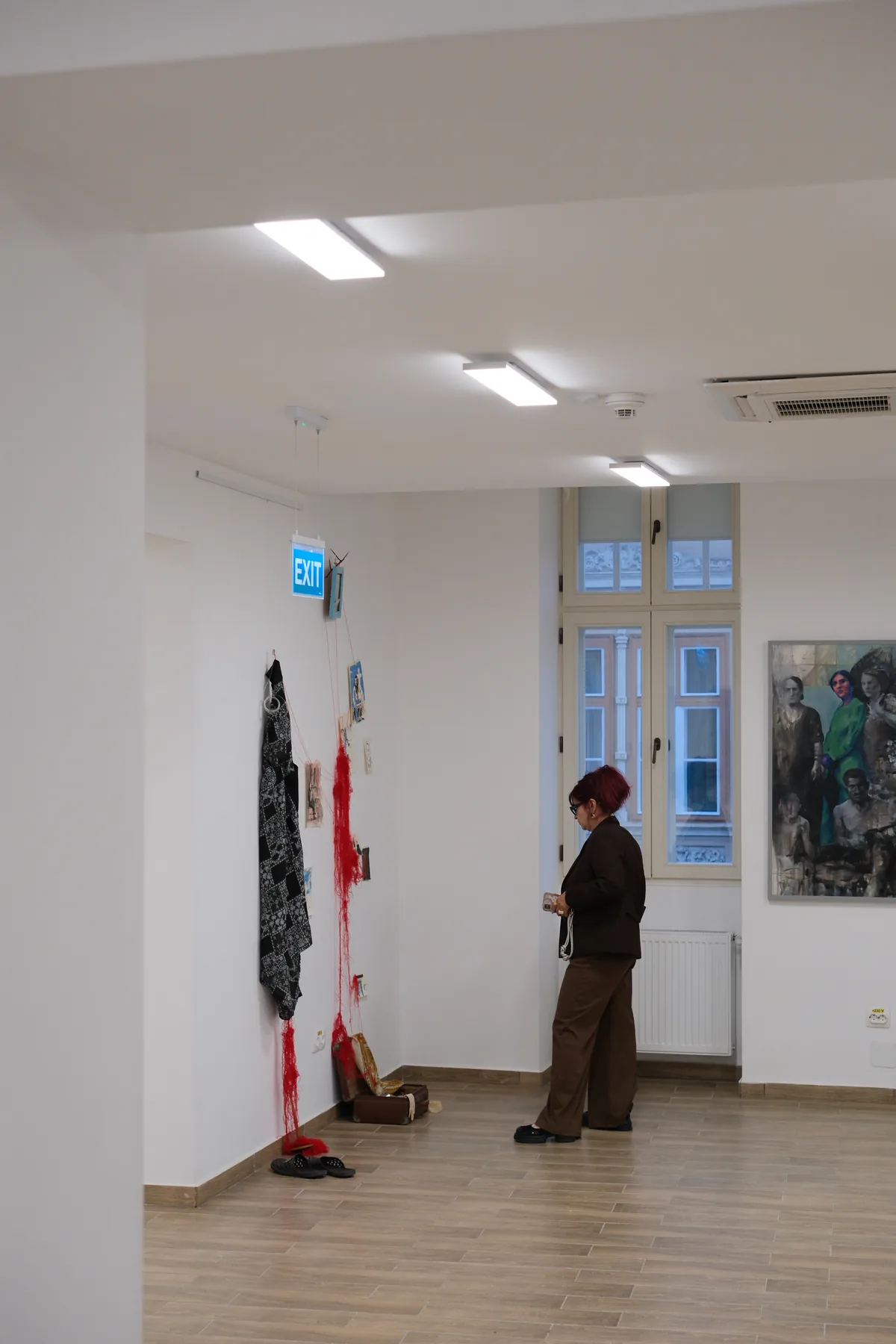
From this sacred apex, the thread descends, traversing constellations of archival family photographs and my own drawings. Because the thread is deliberately hidden behind the artworks rather than visibly piercing them, it implies a fluid, unseen connective tissue. Conceptually, it acts as an unbroken flow of memory and lineage-a vital, pulsing artery that transmits the affective weight of the past across generations.
At ground level, the thread anchors the viewer in the material world. I chose to place her everyday domestic objects-a walking stick, a pair of slippers, and a slightly open small suitcase holding suspended micro-narratives (an unfinished crocheted glove, matchboxes, perfume bottles)-directly on the gallery floor.
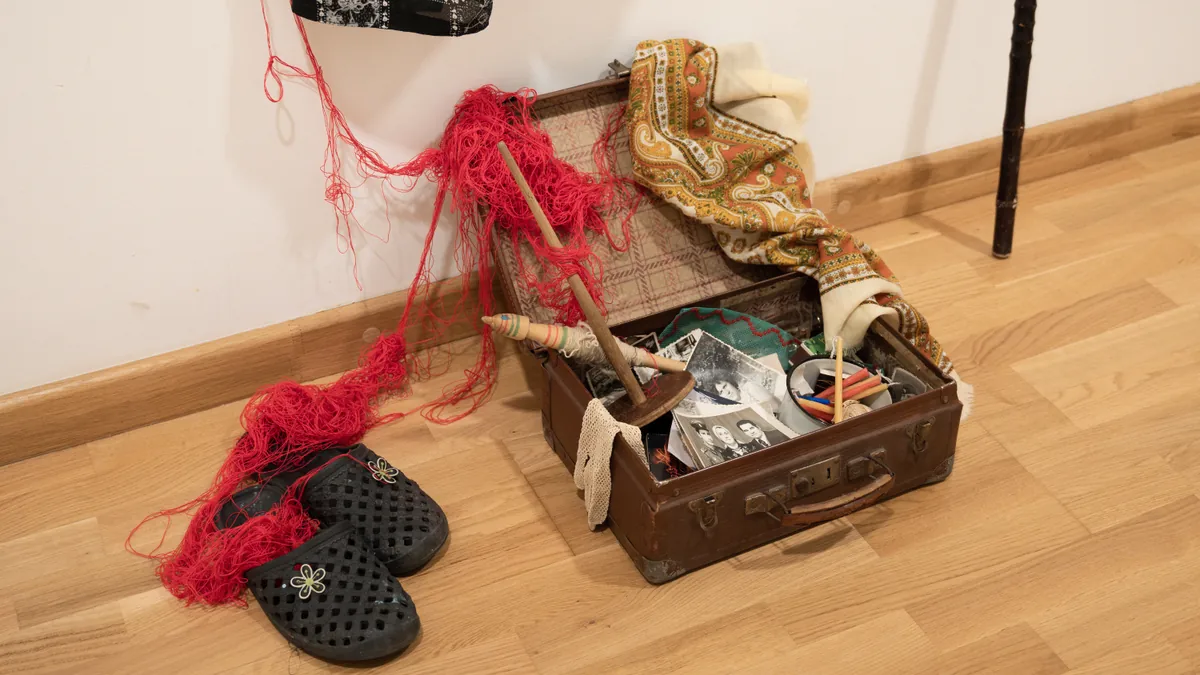
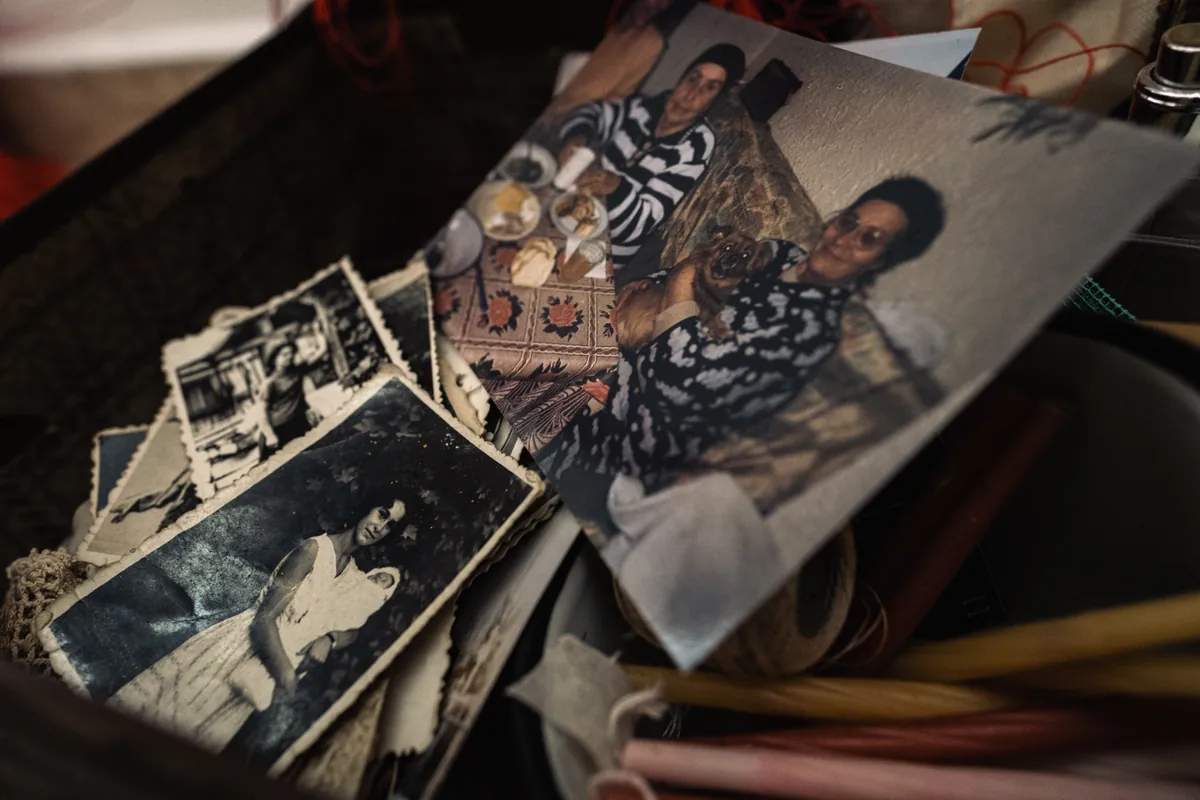
I carefully recovered these intimately personal items from her home after she passed away. Through the act of gathering and recontextualizing her belongings, the installation becomes more than a visual artwork; it acts as a space of active remembrance and a profoundly therapeutic ritual of mourning. Unprotected by plinths or glass, these artifacts sit in a state of raw vulnerability, sharing the exact physical space as the spectator.
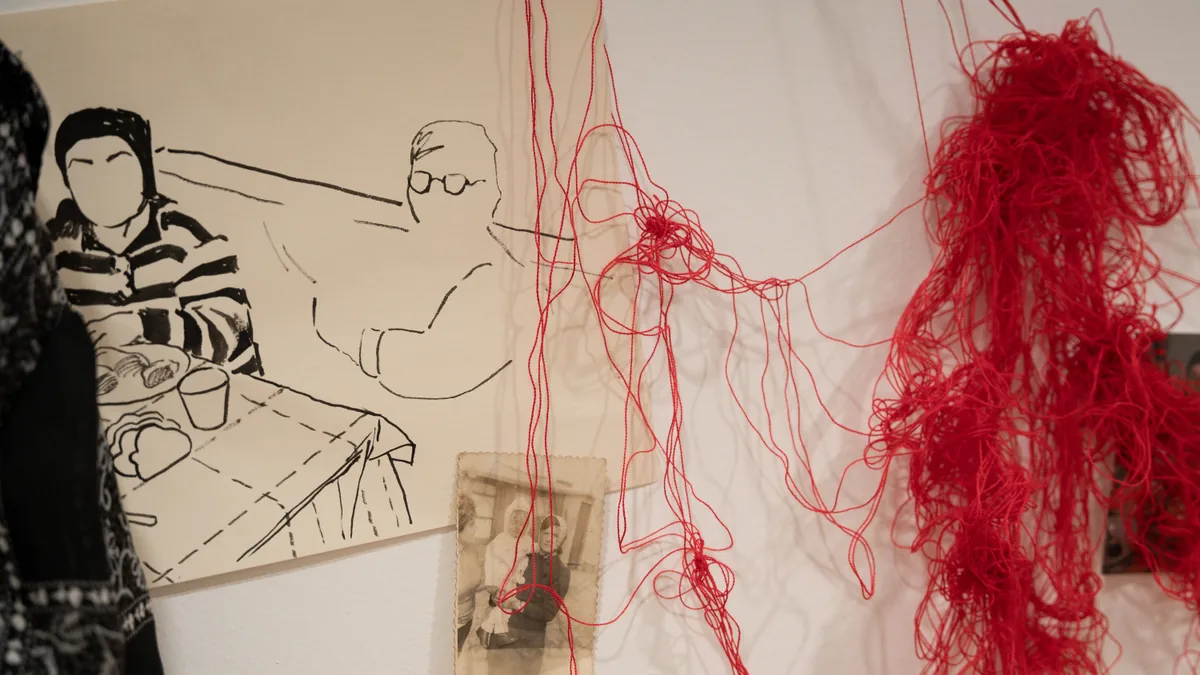
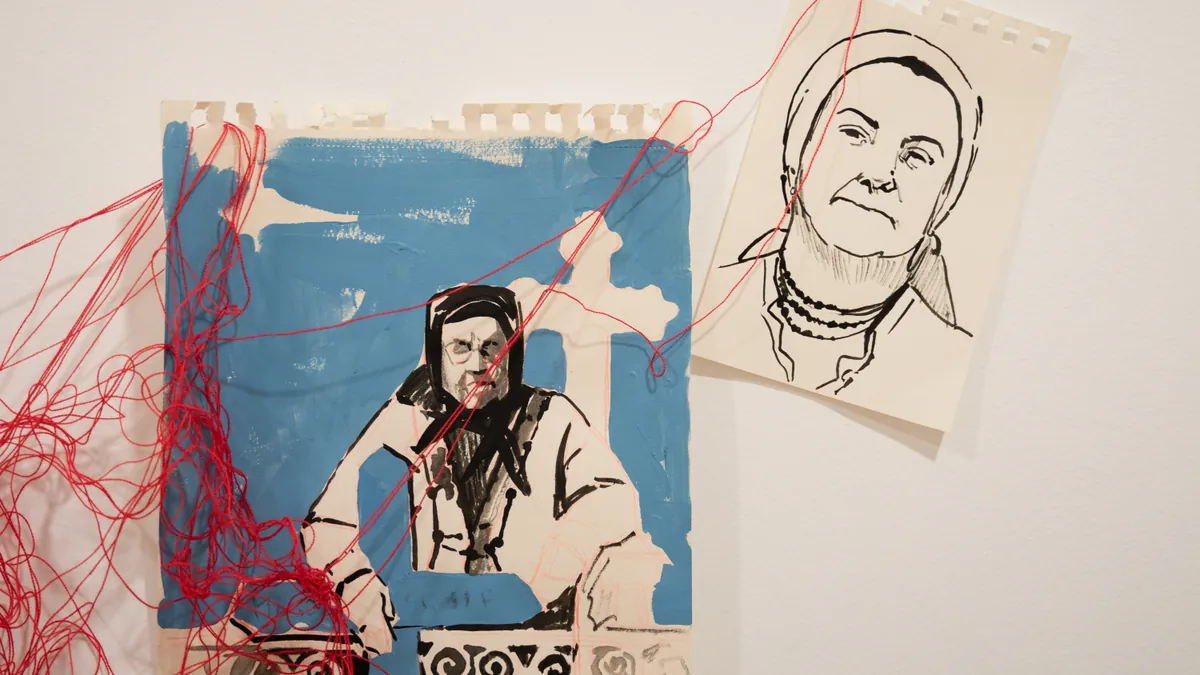
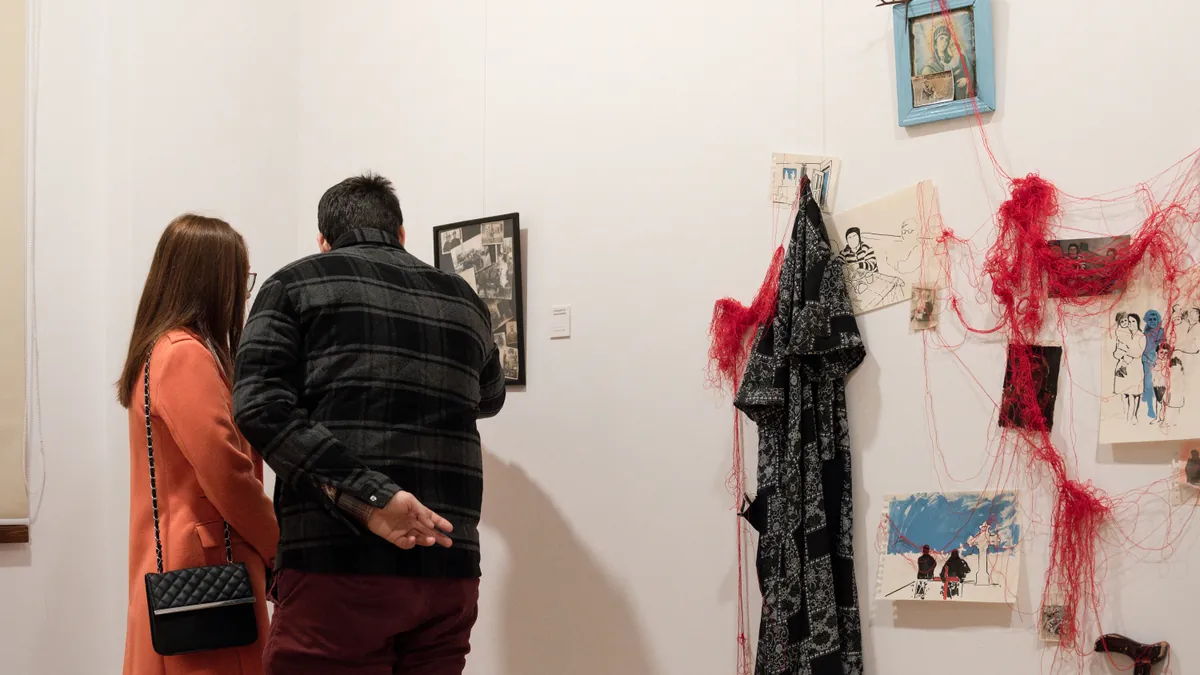
Beyond my personal family history, the work accesses a network of collective archetypes specific to the Romanian cultural space. The viewer is not merely looking at my great-grandmother; they are confronted with a universal language of grief, silent domestic labor, and faith, turning the installation into a mirroring sanctuary for the shared memories of an entire generation.
Exhibition History
Develooped as part of my MA research, this installation has been successfully adapted and exhibited in multiple professional art spaces, proving its spatial versatility and curatorial impact. Previous solo exhibition locations include:
- Muzeul Brăilei „Carol I”
- Casa Artelor
- Muzeul Național al Literaturii Române